Bambu Lab’s 3 Million-Printer Factory Moves Toward Construction in Shenzhen
Bambu Lab’s next factory is moving from a land deal to actual site work. Government filings published in Shenzhen this month show that the consumer 3D printing company is preparing to build a manufacturing campus in Guangming District designed for more than three million 3D printers a year.
From paperwork to construction access
On September 18, the Guangming District government published a notice confirming that Shenzhen Zhuhe Technology — the wholly owned Bambu Lab subsidiary developing the site — had applied for a temporary construction entrance at the planned 3D Printing Intelligent Manufacturing Headquarters Base. The filing covers 75.25 square metres of urban green space and the relocation of five roadside trees at the northwest corner of Tongguan Road and Chengde Road in Yutang Subdistrict. Public consultation ran from September 19 to September 25.
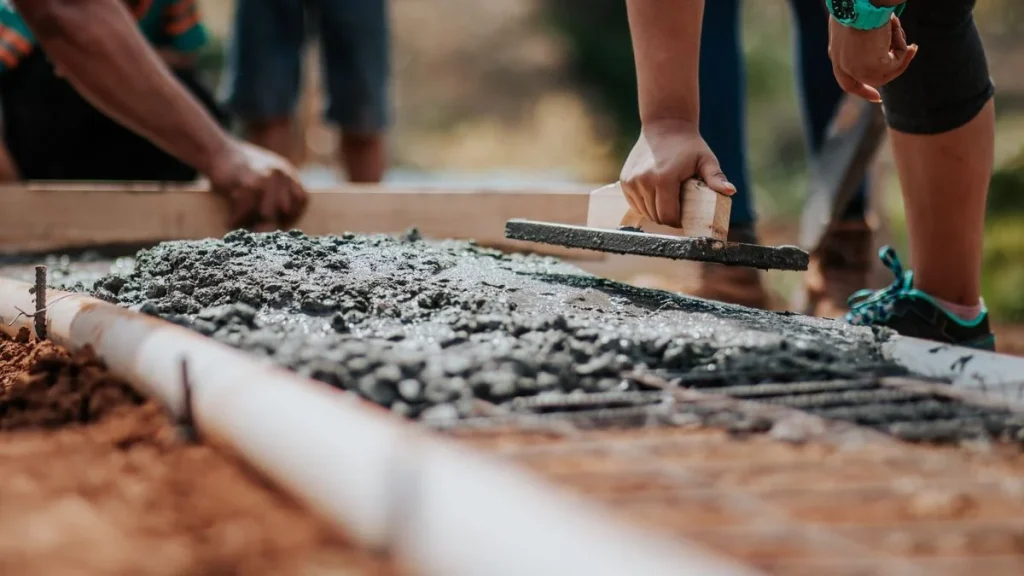
It is modest paperwork, but it matters. The entrance is required so construction vehicles can reach the site, which means access roads, logistics and site compound are now being put in place. Earlier steps followed the same pattern: in April, authorities approved the removal and relocation of trees to clear and level the plot, and a July review reported no public objections.
The scale of the project
The timeline has been fast. A strategic cooperation framework agreement between Guangming District and Bambu Lab was signed on February 25, 2026, followed by a project selection plan in March. On June 29, Shenzhen Zhuhe Technology won industrial plot A609-0275 for RMB 141.2 million (about US$20 million).
- Site area: 83,590.87 square metres in Yutang Subdistrict
- Planned floor area: approximately 376,158 square metres
- Production space: around 281,000 square metres, roughly 75% of the total
- Offices and R&D: about 36,000 square metres
- Dormitories and support: about 56,000 square metres
- Target capacity: more than 3 million 3D printers per year
The campus is designed as more than an assembly plant. Guangming’s selection plan describes core component development and manufacturing, R&D and trial production of 3D printing materials, whole-machine production and software development, all on one site. Automation plans include industrial robots, automated production lines, intelligent warehousing, MES manufacturing software and WMS warehouse management, with incoming inspection covering coordinate measurement and X-ray checks.
Guangming’s documents describe the campus as an ecosystem rather than a single production line, tying together printers, slicing software, materials and the MakerWorld community around one location. Incoming parts, precision assembly, inspection, packaging and finished-goods dispatch are all planned under one automated flow.
Capacity is not the same as sales
Three million printers a year is intended capacity, not a shipment forecast. The land agreement itself sets more conservative obligations: at least RMB 2 billion (about US$298 million) in revenue or industrial output in the first production year, an average of at least RMB 4.5 billion annually afterwards, and no less than RMB 22.5 billion per five-year cycle. Spread across three million units, the annual minimum equals roughly RMB 1,500 per machine before materials and other products made on site.
The number still signals direction. Chinese government figures cited in the project plan show 3D printer exports rising from 1.87 million units in 2022 to 3.55 million, 3.78 million and 5.03 million in the following years — an average annual growth rate of around 40%. A single facility designed for three million units would represent a substantial share of that national total. Guangming is already home to what is described as the world’s largest 3D printer farm, an operation running 15,600 Bambu Lab machines.
Why desktop 3D printing is starting to look like consumer electronics
Desktop 3D printing historically produced machines in the thousands or tens of thousands, with fragmented suppliers and small assembly runs. This project is being designed on a different assumption: automated lines, vertical integration and output measured in millions. Bambu Lab has not waited for the permanent campus — an interim operation at Minghu Zhigu Industrial Park was already in production when the February agreement was signed — so the new base represents a shift from leased, distributed production to a purpose-built system.
For print farms, service providers and hobbyists, more predictable supply of machines and parts is the practical upside, while the automated lines should keep pressure on pricing as volumes scale.
How TT3DPrint Can Help
TT3DPrint runs a 220-printer Bambu Lab farm producing custom figurines, educational tools, cultural products and promotional items for customers worldwide. As the ecosystem scales, we keep adding capacity for short-run and one-off custom orders — send us a design file and we will quote, sample and ship with DHL, FedEx or UPS. Learn more on our products page or contact us for a quote.
Conclusion
The latest development is small — 75 square metres of green space, five trees and a temporary entrance. Behind it is a factory designed to change the scale at which desktop 3D printers are made. Site work is advancing, the interim plant is already producing, and the next few months should show whether construction of the main campus begins on schedule.
Sources: 3D Printing Industry, Guangming District Government notices, 3DPrint.com.