Europe Largest 3D Printed Apartment Block Finished 3 Months Early
Europe’s Largest 3D Printed Apartment Block Is Done — And It Finished Early
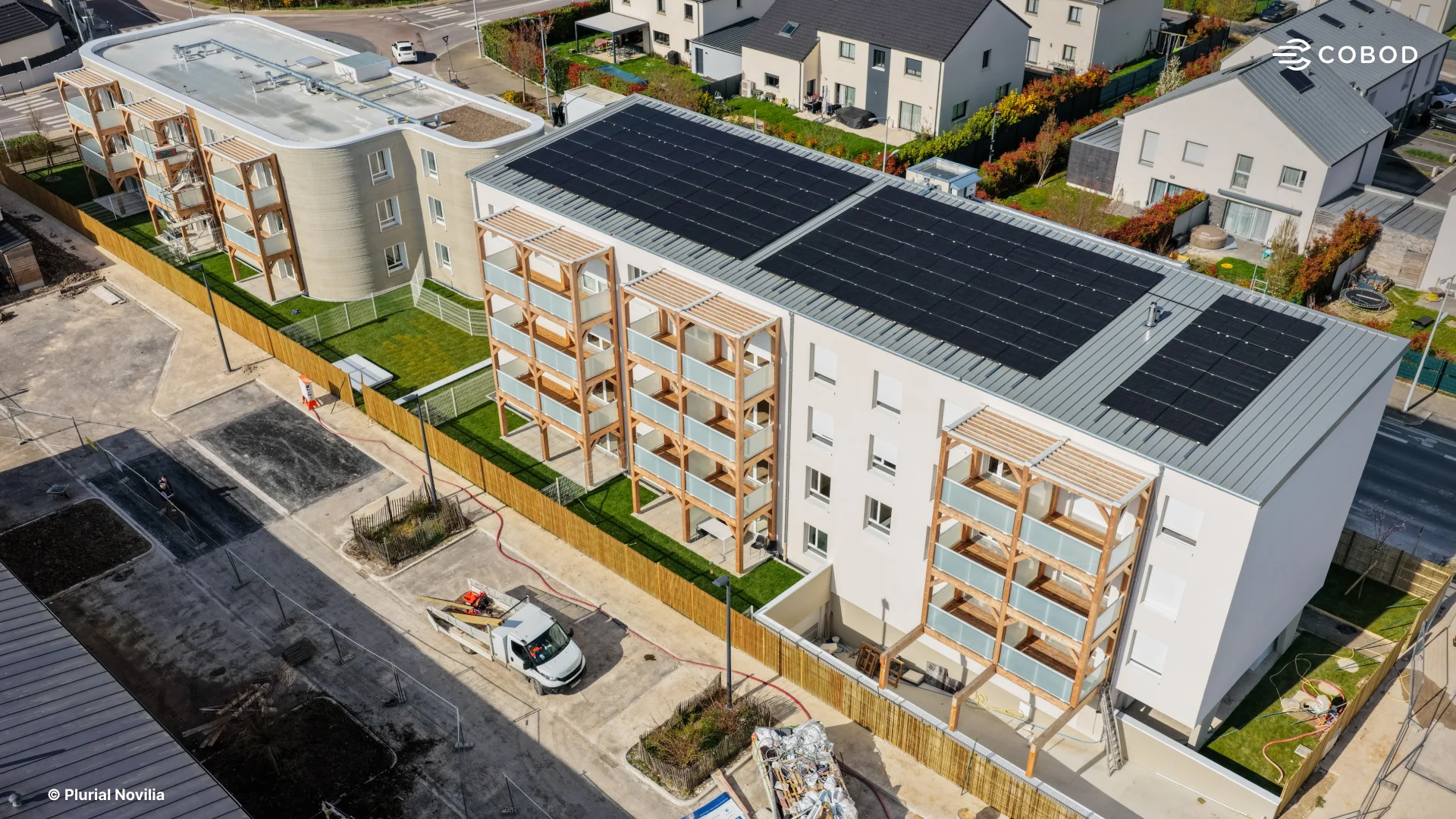
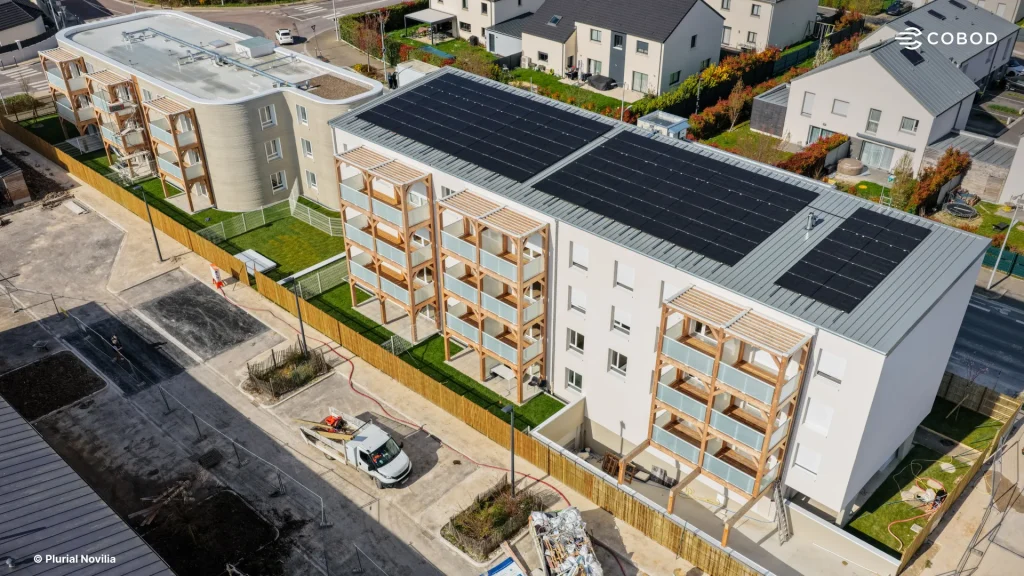
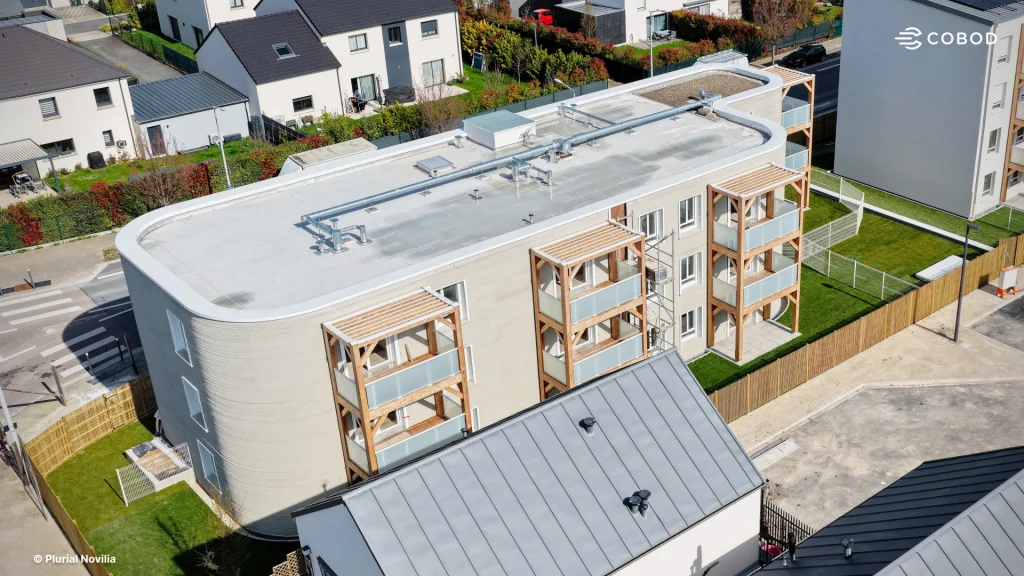
A social housing project in Bezannes, France has just set a new record for 3D construction printing in Europe. The development, known as ViliaSprint², delivers 12 apartments across three floors and roughly 800 square meters of livable space — making it the continent’s largest 3D printed multi-family residential building to date.
What makes this project stand out isn’t just its size. It’s the fact that the entire load-bearing structure was printed on-site in just 34 days, smashing the original 50-day projection and cutting three months off the overall construction timeline compared to conventional methods.
How It Was Built
The project brought together four key players: PERI 3D Construction (technology partner and print executor), COBOD International (Danish printer manufacturer), Holcim (concrete supplier), and Plurial Novilia (developer, a subsidiary of Action Logement, France’s social housing agency).
At the heart of the build was COBOD’s BOD2 gantry printer, which deposited concrete layer by layer to form walls and structural elements directly on the construction site. Operators managed the printer via tablet — no heavy lifting required.
The results speak for themselves:
- Workforce reduced by 50% — from six workers for traditional shell construction to just three for the 3D printed build
- Construction waste cut in half — from 10% down to 5%
- ~10% less concrete used — thanks to curved geometries that are cost-effective with 3D printing but impractical with traditional formwork
- 34 days for the full print — versus the originally planned 50 days
Not Just Fast — Smart
The building wasn’t designed with speed alone in mind. ViliaSprint² integrates perlite insulation, timber balconies, 500 square meters of photovoltaic panels, and a hybrid heating system. The result: approximately 60% energy self-sufficiency, meeting France’s strict RE2020 2025 energy standards.
The curved façade and floorplan aren’t aesthetic flourishes — they’re a direct result of what 3D printing makes cost-effective. Traditional construction would require expensive custom formwork to achieve these shapes, but the printer handles curves as easily as straight lines.
Perhaps most importantly, Plurial Novilia built a nearly identical conventional building on the same site as a controlled comparison. The side-by-side results confirmed that 3D printed shell construction time was cut in half, providing hard data rather than projections.
What This Means for the Construction Industry
The global construction industry faces two mounting pressures: a severe shortage of skilled workers and the urgent need for faster, more sustainable building methods. 3D construction printing addresses both.
“ViliaSprint² is a great example of how 3D construction printing can cut construction time, material consumption and waste and limit the amount of labor used, also for quite large buildings,” said Henrik Lund-Nielsen, Founder and General Manager of COBOD International. He noted that using a 5 cm layer height (technically possible with the BOD2) could have reduced the printing time from 34 days to just 14 days.
The partners are already planning a follow-on project of around 40 apartments, this time deploying two printers simultaneously. The target: a fourfold reduction in print time, with costs approaching parity with conventional construction.
This isn’t an isolated case. Germany’s PERI DREIHAUS project printed the walls of its largest building in 26 working days. In the US, Alquist 3D printed a three-bedroom home exterior in just 28 hours. Each project pushes the boundaries further, and ViliaSprint² — with its controlled comparison and three-month timeline reduction on a 12-unit building — raises the bar for what the industry considers proof, not just promise.
How Custom 3D Printing Services Can Help
While concrete 3D printing transforms large-scale construction, the same principles of digital manufacturing, reduced waste, and faster turnaround apply to custom FDM and polymer printing. At TT3DPrint, we specialize in rapid prototyping and custom 3D printing services for businesses, educators, and creators. Whether you need functional prototypes, custom parts, or small-batch production, our FDM printing cluster delivers quality results with quick turnaround.
From concept to finished part, digital manufacturing is reshaping how things get built — whether it’s an apartment block in France or a custom component for your next project.
Conclusion
ViliaSprint² proves that 3D construction printing has moved beyond the pilot stage. With hard data from a controlled comparison, a 50% workforce reduction, and a three-month timeline improvement on a real multi-family building, the technology is ready for mainstream adoption. As the next phase targets 40 apartments with dual printers, the question isn’t whether 3D printing will reshape construction — it’s how fast.
Sources: 3D Printing Industry, Holcim, COBOD International