Rocket Lab 3D Printed Engine Hits 1000 Units Milestone
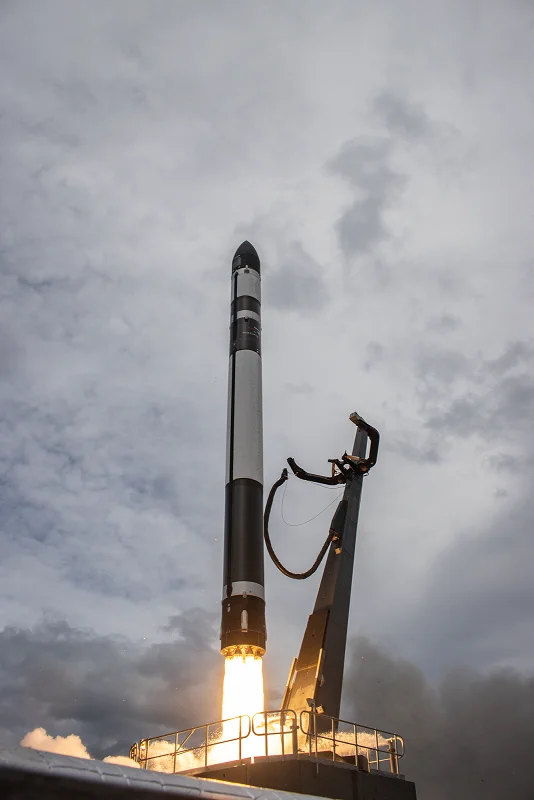
Rocket Lab Reaches a Historic Milestone in 3D Printed Rocket Propulsion
The aerospace industry has long viewed additive manufacturing as a promising but unproven technology for mission-critical components. That narrative changed this week when Rocket Lab announced the production of its 1,000th Rutherford engine — the world’s first 3D printed, electric pump-fed orbital rocket engine. The milestone, achieved at the company’s Long Beach, California facility, positions the Rutherford among the most manufactured rocket engines on Earth.
What makes this achievement particularly remarkable is the speed of the journey. The Rutherford engine first reached orbit in January 2018, just seven years ago. In that time, Rocket Lab has scaled production from roughly one engine per month to an annual target of approximately 200 units. By late 2025, the engine had accumulated a flight record spanning more than 70 Electron missions, with over 800 units having reached space before the 1,000th rolled off the production line.
How Additive Manufacturing Redefined Rocket Engine Production
The Rutherford engine represents a fundamental departure from traditional rocket propulsion design. At just 35 kilograms, it replaces the gas turbine assemblies found in conventional rocket engines with lithium-polymer battery-driven electric motors — an architecture that additive manufacturing made both structurally and economically feasible.
Every major component of the Rutherford is additively produced: the combustion chamber, injectors, pumps, and propellant valves. According to Rocket Lab, the full set of components for a single engine can be printed within one day. This stands in stark contrast to the weeks or months required for traditional casting and machining processes.
The production line utilizes metal 3D printing systems from EOS, Nikon SLM Solutions, and Renishaw, with Carpenter Technology supplying the metal powders. This multi-vendor approach provides production redundancy and flexibility — critical factors when manufacturing at this scale.
What This Means for the Broader 3D Printing Industry
Rocket Lab’s milestone sends a clear signal to industries beyond aerospace: additive manufacturing has matured from a prototyping tool into a viable production technology for high-performance, safety-critical applications. The Rutherford’s track record of reliable orbital missions demonstrates that 3D printed components can withstand the extreme conditions of spaceflight.
For businesses considering additive manufacturing for their own production needs, the Rutherford engine offers several lessons:
- Design for additive manufacturing (DfAM) unlocks new possibilities — The electric pump-fed architecture would be impractical with traditional manufacturing methods.
- Scaling is achievable — From one engine per month to 200 per year, Rocket Lab proves that 3D printing can meet industrial production demands.
- Material and process selection matters — The use of multiple printing platforms and specialized metal powders ensures quality and reliability at scale.
As the 3D printing market continues its rapid expansion — with industry analysts projecting the global additive manufacturing market to exceed $50 billion by 2030 — milestones like Rocket Lab’s 1,000th engine remind us that the technology’s greatest impact may lie not in consumer gadgets, but in the most demanding engineering challenges humanity faces.
How TT3DPrint Can Help
While most businesses don’t need rocket engines, the same principles of additive manufacturing that power the Rutherford engine apply to custom production needs across industries. At TT3DPrint, we leverage industrial-grade FDM and SLA printing to deliver high-quality custom parts for prototyping, education, and production — from one-off prototypes to small-batch manufacturing runs. Whether you’re developing a new product, creating educational models, or need precision custom components, our team can help you harness the power of 3D printing for your specific application.
Conclusion
Rocket Lab’s 1,000th Rutherford engine is more than a corporate milestone — it’s proof that additive manufacturing has earned its place in the highest tiers of industrial production. As the technology continues to advance and costs decrease, we can expect to see 3D printing transform more industries in the years ahead. The question is no longer whether 3D printing can deliver at scale, but rather which industries will adopt it next.
Source: 3D Printing Industry — Rocket Lab’s 3D Printed Engine Hits 1,000 Units