3D Printed Sneakers Go Mainstream: Nike, Zellerfeld, and Fitasy Lead the Charge

Introduction
The footwear industry is undergoing a quiet revolution. In 2026, 3D printed shoes have moved far beyond the lab and the trade show booth — they are hitting store shelves, partnering with NBA legends, and solving problems that traditional manufacturing never could. From Nike’s latest collaboration with Zellerfeld to Fitasy’s groundbreaking single-shoe purchasing model, additive manufacturing is reshaping what it means to design, produce, and wear sneakers.
Forbes recently asked a provocative question: “Footwear production, and our feet, are broken. Can 3D print fix both?” The answer, it turns out, is increasingly yes.
Nike and Zellerfeld Push Boundaries With Air Max 1000.2
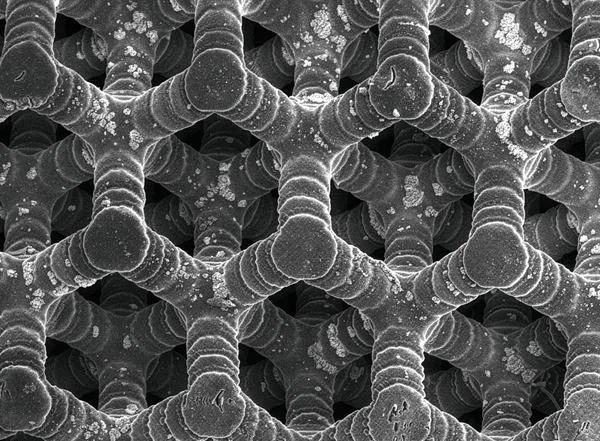
Nike’s partnership with Zellerfeld continues to mature. The Air Max 1000.2, unveiled in August 2026 in a striking “Black/Hyper Crimson” colorway, represents the most advanced 3D-printed sneaker from a major brand to date. The shoe features algorithmic design — a lattice midsole structure optimized not by a human designer but by computational fluid dynamics, resulting in a sole that adapts to the wearer’s unique foot pressure and gait pattern.
What makes the 1000.2 significant is the two-tone 3D printing process. Unlike earlier attempts where color was applied post-print, the Air Max 1000.2 integrates two distinct polymer colors directly during the additive manufacturing process. The result is a seamless, multi-chromatic shoe that doesn’t rely on dyes, paints, or separate material layers — reducing waste and production steps simultaneously.
Nike has also teased a multicolor Air Max 1000 prototype that pushes this concept even further, suggesting that future releases may feature fully gradient color schemes printed in a single pass. For sneaker collectors and custom print enthusiasts alike, this signals a future where every pair could be unique without any additional cost.
Allen Iverson Goes 3D Printed With Zellerfeld Reebok Questions
In a move that bridges basketball heritage with futuristic manufacturing, NBA legend Allen Iverson has announced 3D-printed versions of his iconic Reebok Question sneakers, produced by Zellerfeld. The Reebok Question — originally released in 1996 — is one of the most recognizable basketball shoes in history, and seeing it reimagined through additive manufacturing speaks to the versatility of 3D printing.
Baron Davis, another NBA veteran, has also partnered with Zellerfeld on a 3D-printed sneaker, further cementing the technology’s credibility in the performance footwear space. These collaborations aren’t just marketing stunts — they represent a genuine shift in how athletic brands view production methods.
Fitasy and the Rise of Single-Shoe Purchasing
Perhaps the most consumer-friendly development in 3D printed footwear is Fitasy’s single-shoe purchasing model. The Indianapolis-based company has leveraged Spatial AI technology to create custom-fit 3D printed shoes that can be ordered individually — a game-changer for the estimated 40% of people with different-sized feet.
Traditional footwear manufacturing requires producing shoes in fixed size increments (US 7, 8, 9, etc.), which means millions of people end up wearing shoes that don’t truly fit. Fitasy’s approach uses 3D scanning and AI-driven spatial analysis to create a precise digital model of each foot, then prints shoes to match those exact dimensions.
The company has already secured a partnership with USA Diving as their official footwear partner, demonstrating that 3D printed shoes can meet the rigorous demands of competitive athletes. Their single-shoe option makes financial sense too — instead of manufacturing pairs and hoping they sell, each shoe is made on demand, eliminating inventory waste entirely.
The Global Footwear Market Takes Notice
The 3D printed footwear market is expanding beyond the US. India’s Drifbolt recently launched as the country’s first 3D printed footwear brand, introducing a TPU lattice collection that brings the technology to South Asia. Meanwhile, European companies continue to invest heavily in volumetric and multi-material printing for footwear applications.
Forbes highlighted a fundamental problem with traditional shoe manufacturing: the process involves over 40 individual components, dozens of assembly steps, and significant material waste. A typical running shoe generates roughly 14 pounds of CO2 during production. 3D printing reduces this dramatically — some estimates suggest up to 60% less material waste compared to cut-and-sew methods, with a fraction of the assembly steps.
What This Means for Custom Printing Services
The footwear revolution has direct implications for custom 3D printing services. The same TPU lattice structures that make 3D printed shoes comfortable and durable are applicable to custom orthotics, protective gear, and prosthetics. The demand for on-demand, personalized manufacturing — whether for a single shoe, a custom figurine, or a prototyping run — is driving innovation across the entire additive manufacturing ecosystem.
At TT3DPrint, we see this trend firsthand. Clients increasingly request custom-fit products that traditional manufacturing can’t efficiently produce in small batches. The Bambu Lab printers in our fleet can produce TPU and PLA parts with the precision needed for wearable applications, and our experience with multi-material printing means we can handle everything from flexible lattice structures to rigid support components.
Conclusion
3D printed footwear in 2026 is no longer a novelty — it’s a movement. With major brands like Nike investing in algorithmic design, pioneers like Fitasy solving real consumer pain points, and basketball legends lending their names to the technology, the gap between “experimental” and “everyday” is closing fast.
The question is no longer whether 3D printed shoes will become mainstream, but how quickly. For anyone interested in custom-fit products, prototyping, or the future of manufacturing, now is the time to explore what additive technology can do.
Ready to bring your ideas to life with custom 3D printing? Contact TT3DPrint for a quote on your next project.