How a Father-Daughter Duo Built a $428K 3D Printed Fidget Toy Business


Introduction
What do you reach for when you need a moment to focus? For thousands of people across the United States, the answer is a small, brightly colored piece of plastic that produces a soft and satisfying “click” when pressed. These are fidget clickers — the modern successor to the fidget spinner craze of the 2010s — and a growing share of them are being 3D printed by a father-daughter duo who turned a two-printer hobby into a six-figure business.
From a Teaching Side Hustle to a $428K Business
Victoria Baumann, 32, started Victoria Essie Studio in 2018 as a side business selling watercolor paintings and polymer clay jewelry while working as a full-time teacher. Her father, Charlie Moreton, 51, is a 3D printing hobbyist who works as a network security engineer. In 2025, Moreton came across a design for a cake-shaped fidget clicker that perfectly matched his daughter’s aesthetic — cute, colorful, and influenced by Y2K nostalgia — and the pair jumped into the fidget toy market together.
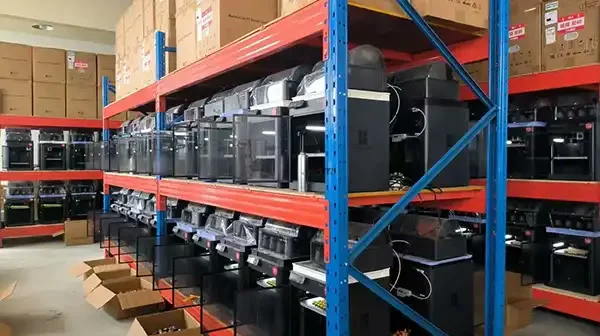
The results were remarkable. According to documents reviewed by CNBC Make It, Victoria Essie Studio generated $428,000 in revenue in 2025, with a net profit of about $94,000. What started as a two-printer operation has grown into a full-fledged business running roughly 30 printers out of their homes in North Carolina.
The $9 Billion Fidget Toy Market
Fidget toys are far more than a passing trend. In 2025, the global fidget toys market was valued at over $9 billion, according to Fortune Business Insights, with continued growth projected over the next decade. Health experts note that fidget tools can be particularly helpful for people with anxiety, ADHD, or autism spectrum disorders, which has broadened the customer base well beyond children.
“People have realized it’s not just for kids,” Baumann told CNBC. “There’s a lot of adults who just need something to click through the day.” The studio’s customers skew toward women and neurodivergent individuals of all ages, with many buyers purchasing clickers for the children in their lives — from teachers stocking their classrooms to dental offices keeping toys on hand for young patients.
How 3D Printed Fidget Toys Are Made
Each fidget clicker is built from roughly two to six 3D printed plastic parts. Baumann and Moreton describe the mechanical component as having “the same type of mechanical component as a mechanical keyboard,” giving the toys their satisfying tactile feel and click. Printing the pieces for a simple fidget takes about 17 hours, while more complex multi-color designs can take three to four days.
The assembly process is surprisingly fast: the duo can put together about 100 fidget clickers in under an hour. Once assembled, Baumann handles packaging and shipping. The business now averages about 1,500 orders a month, with themed product drops generating up to 400 orders in a single day.
Business Lessons from a Family-Run Print Farm
Several factors have fueled the studio’s growth. Their ASMR-style behind-the-scenes social media videos have captured the attention of millions, earning praise from major content creators. They also partner with independent artists, paying commercial licenses for designs ranging from cereal bowls to toadstools, while developing original designs of their own — including fidgets shaped like inhalers, sticky note holders, and crayons.
Pricing is tiered for a wide audience: standard handheld fidgets sell for $5 to $30, while life-sized versions — like a full plate of “waffles” instead of a miniature — run $100 to $125. Notably, the pair reinvest their profits back into the studio and have never taken out a business loan, a testament to the low-overhead, high-margin nature of desktop 3D printing.
How TT3DPrint Can Help
Victoria Essie Studio’s story highlights exactly what makes desktop FDM 3D printing such a powerful fit for small-batch consumer products: low upfront cost, rapid iteration, and the ability to test a new design with real customers before scaling up. At TT3DPrint, we specialize in custom FDM 3D printing for figurines, educational tools, and creative gifts, backed by a fleet of 220 Bambu Lab printers capable of everything from one-off prototypes to production runs.
Whether you are prototyping a fidget toy, launching a themed collectible collection, or exploring custom promotional products, we can help you move from design to finished product fast. Contact us for a quote and see how on-demand 3D printing can turn your idea into a market-ready product.
Conclusion
The father-daughter team behind Victoria Essie Studio proves that a niche idea, a couple of 3D printers, and smart use of social media can grow into a serious business. As the fidget toy market continues to expand and 3D printing becomes more accessible, the barrier to launching a custom product line has never been lower. For aspiring makers and established brands alike, the lesson is clear: the next successful product might be just one print away.