From Plastic to Plate: NASA-Funded Scientists 3D Print Cookies From Waste

From Plastic Waste to Edible Cookies: The µBites Revolution
What if the plastic bottle you just tossed in the recycling bin could become a protein-rich cookie? That is exactly what a team of researchers at Southern Illinois University Carbondale has achieved. Their creation, called µBites (pronounced “microbites”), is a3D-printed cookie made from upcycled PET plastic and agricultural waste — and it could reshape how we think about both food production and plastic pollution.
Presented at the American Chemical Society (ACS) Fall2026 meeting in Chicago on August24, the µBites project represents a striking convergence of synthetic biology, CRISPR gene editing, and additive manufacturing. The cookies are safe to eat according to laboratory testing, and the team hopes they will be ready for public consumption within a few years.
How CRISPR-Engineered Yeast Turns Plastic Into Food
The science behind µBites begins with a32-step process that breaks down PET plastic — the same material used in soda bottles — into its fundamental molecular components using heat, pressure, oxygen, and water. But the real innovation lies in what happens next.
Graduate researcher Sandhya Jayasekara programmed multiple strains of yeast using CRISPR gene-editing technology to convert the carbon-rich molecules from broken-down plastic into edible ingredients. The engineered yeasts now produce:
- Protein-rich biomass — the primary nutritional component of the cookies
- Vanillin — the chemical compound responsible for vanilla flavor and aroma
- Beta-carotene — a nutrient found in carrots that the body converts to vitamin A, giving the cookies their golden color
The team combines this yeast-derived biomass with fiber, starch, and sweetener to create a dough-like substance. This mixture is then extruded through a3D printer to form cookie shapes, which are microwaved to cook. The result is a protein-rich µBites cookie that laboratory and third-party testing has confirmed is free from toxic chemicals, heavy metals, allergens, and food pathogens.
“Microbes are very clever,” said Dr. Lahiru Jayakody, the principal investigator. “So we are using their traits to solve the problems we created.”
Born From NASA’s Deep Space Food Challenge
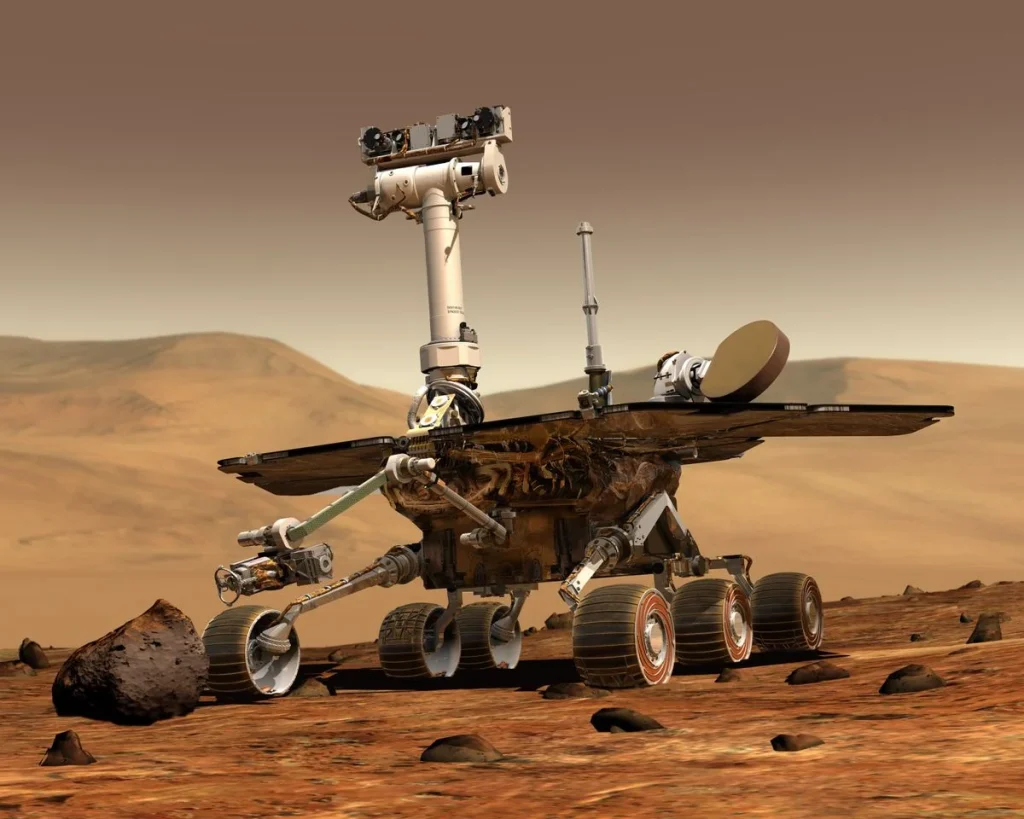
The µBites project has its origins in one of the most ambitious food science competitions ever conceived. In2021, NASA and the Canadian Space Agency launched the Deep Space Food Challenge, seeking innovations that could feed astronauts during long-duration missions to the Moon, Mars, and beyond.
The SIU Carbondale team won a Phase1 grant of $25,000 as one of38 selected teams. Their concept — converting waste materials into nutritious food using engineered microorganisms — caught the attention of judges for its dual potential: solving food scarcity in extreme environments while simultaneously addressing plastic waste.
Since winning the initial grant, the project has received additional funding and expanded its capabilities significantly. The original µBites could produce basic protein cookies, but the latest version with vanillin and beta-carotene production represents a major leap in making the product more appealing and nutritionally complete.
The3D Printing Connection
3D printing plays a critical role in the µBites production process. The yeast-derived biomass, combined with traditional food ingredients, creates a viscous dough that is too thick for conventional food manufacturing equipment. A3D printer solves this problem by precisely extruding the mixture into consistent cookie shapes.
This application highlights an often-overlooked strength of additive manufacturing: the ability to process materials that traditional machinery cannot handle. Just as3D printing has revolutionized manufacturing with complex geometries in metals and polymers, food-grade3D printing opens new possibilities for novel food textures and compositions that would be impossible to produce with standard molds or extruders.
Food3D printing has been growing steadily, with companies like Natural Machines, Procusini, and Cocoa Press developing printers for chocolate, pasta, and other foods. The µBites project pushes this technology into entirely new territory — printing food from materials that were never traditionally considered edible.
Addressing Two Global Crises at Once
The µBites research arrives at a critical moment. According to the United Nations, global food demand is projected to increase35to56percent by2050, with roughly30percent of the world’s population currently at risk of hunger. At the same time, plastic pollution accounts for approximately3.4percent of global greenhouse gas emissions, and only a fraction of plastic waste is actually recycled.
The µBites approach tackles both problems simultaneously. By converting plastic waste into edible protein, the technology reduces pollution while creating a new food source. The researchers envision multiple applications for their technology:
- Deep space missions — converting waste materials into food during long voyages
- Submarines and military operations — self-sustaining food production in confined environments
- Disaster zones — emergency food production when supply chains are disrupted
- Remote environments — Arctic, Antarctic, and other locations with limited food access
The team has a patent application pending for their production system and is working toward the remaining regulatory approvals needed for human taste testing.
What Comes Next for µBites
While the safety data is promising, µBites are not yet available for public consumption. The team still needs institutional approval to conduct formal taste tests. As one researcher noted, “I think that if I was in a disaster zone and didn’t have anything else to eat, I would eat it, but I’m not sure I would pick it off the shelf over an Oreo.”
The researchers are also working to produce the remaining cookie ingredients — starch, fiber, and sweetener — using engineered microorganisms, which would make the entire production process self-contained. If successful, this could lead to a fully microbial food production system where the only inputs are plastic waste, agricultural byproducts, and the engineered yeast cultures.
The µBites project demonstrates how the convergence of synthetic biology and3D printing is creating solutions that neither technology could achieve alone. As3D printing continues to expand beyond traditional manufacturing into food, medicine, and beyond, projects like µBites show that the technology’s most transformative applications may be the ones we haven’t yet imagined.
How TT3DPrint Can Help
At TT3DPrint, we specialize in custom FDM3D printing for prototypes, figurines, educational tools, and creative products. While we haven’t started printing cookies just yet, our220+ Bambu Lab printer cluster can bring your most ambitious designs to life. Whether you need a single prototype or a batch of custom products, we deliver worldwide with fast turnaround times.
Contact us for a quote on your next3D printing project.