Make for Good: Bambu Lab’s Accessibility Design Challenge
Introduction
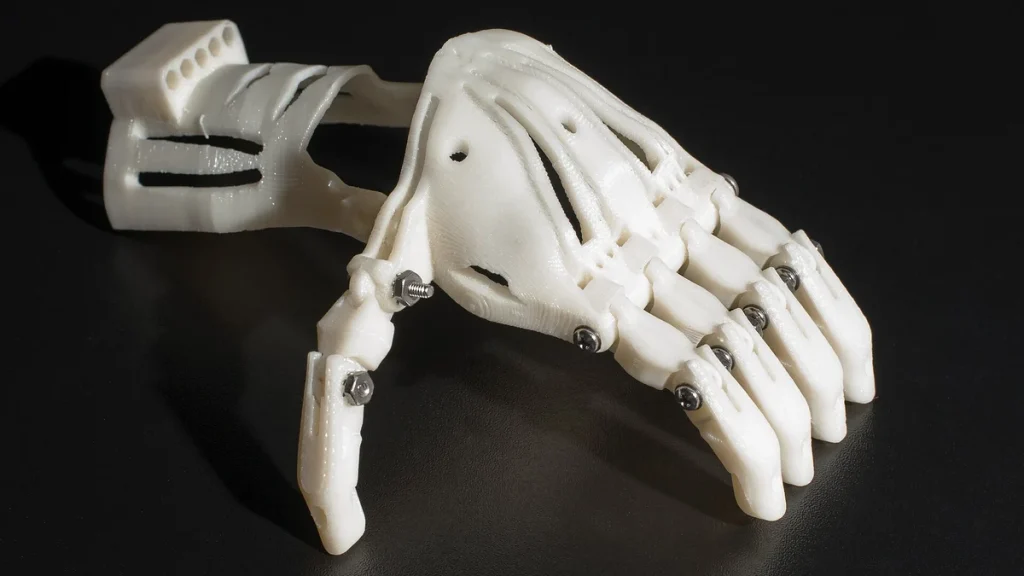
On September 16, 2026, Bambu Lab together with seven accessibility organizations launched Make for Good, a global design challenge hosted on MakerWorld. Between September and December 2026, 24 design briefs will ask makers around the world to invent accessibility aids that someone can pick up, hold and actually use. It is the first time MakerWorld has mobilized its community of designers around specific, everyday needs identified by people with disabilities.
What the Briefs Ask Makers to Solve
The program is deliberately concrete. Each brief describes a small, stubborn problem from ordinary life rather than a broad ambition.
Jessia Cox, founder of Rightfooted Foundation International, was born without arms and uses her feet for daily life. She can pull on her first sock with a bare foot, but the second sock is the problem: once one foot is covered she loses the friction needed to pull fabric over her heel. Fastening a bike helmet still means sitting on the floor and lining up two small buckle halves by feel, one foot planted for balance.
At the Emerging Tech Lab of Rancho Los Amigos National Rehabilitation Center, the same kind of friction shapes its work. Picking something up off the floor is difficult when a conventional reacher requires squeezing a handle, and wheelchair users often struggle just to store, reach and retrieve a phone, wallet or set of keys. Those everyday situations become design briefs.
The kitchen, bathroom and hobbies are covered too. Ayúdame3D is requesting a toothbrush that does not have to be pinched and a tool for tying a ponytail with one hand. e-Nable France challenges makers to build a one-hand kitchen toolkit. Neil Squire Society’s Makers Making Change asks for a knitting-needle support for people who have had a stroke, a guitar pick that stays in place with limited grip, and a marker-cap aid a teacher can operate alone. PrintLab wants a tabletop game that a child with cerebral palsy can play with friends.
How the Challenge Works
The MakerWorld community has two months to submit designs. The accessibility organizations then spend one month printing shortlisted models and testing them with the people named in the briefs, with some partners delivering the prints directly to users. Feedback from that testing informs the final results.
Winning files will not stay on a shelf. They will be added to open libraries and distributed through volunteer networks that already deliver devices in more than 70 countries. Makers Making Change alone maintains a library of more than 200 open-source assistive device designs, each documented so it can be built by people with little or no technical skill.
Why the Timing Matters for 3D Printing
“These are not hypothetical users,” said Qianye, Creator Operation at MakerWorld. “Jessica already walks her dog. Someone in a ward at Rancho already drops something and has to ask a stranger to pick it up. The question for makers is very small and very specific: can you print the missing piece so that person does not have to ask?”
As Bambu Lab notes in the announcement, hardware stopped being the main barrier to assistive 3D printing years ago. Affordable desktop printers and a model library that now holds more than 2 million free files mean the missing ingredient is design attention: skilled creators who understand a specific lived limitation and can iterate a part in a day instead of waiting months for a commercial product.
That is what this kind of distributed manufacturing does best. A device that serves only a few hundred people will never justify a factory tooling budget, but it is trivially printable at home or in a school lab. For makers, educators and rehabilitation teams, the economics flipped from “too niche to produce” to “print one, test it, improve it, print it again.”
How TT3DPrint Can Help
Not everyone has a printer tuned for fine assistive parts. At TT3DPrint we run a large Bambu Lab FDM cluster and produce custom parts daily for clients worldwide — figurines, educational tools, prototypes and functional components in PLA, PETG and TPU. If you have downloaded an open-source assistive design and need accurate, repeatable prints in a specific material or color, or you need a small batch for a classroom, clinic or community program, our team can quote it quickly and ship internationally. Visit our contact page with the file and requirements and we will get back to you with a price.
Conclusion
Make for Good runs through December 2026, and its success will be measured in ordinary moments: someone who put a game aside because the pieces were too small sits down and plays; someone ties a ponytail without help; someone puts on a second sock with ease. Twenty-four briefs is a modest number, but each one is a real person waiting for a part that no manufacturer will ever make. That is exactly the gap 3D printing was supposed to fill.
Contact TT3DPrint to turn an open-source assistive design into a finished, usable print.