UCLA Donates 3D Printers to LA Schools With Hands-On Training
Introduction
When a university upgrades its lab equipment, the old machines usually head to storage or auction. The UCLA Samueli Makerspace found a better fate for its retired fleet: this year, the makerspace donated more than a dozen refurbished 3D printers to Los Angeles-area middle and high schools, along with the training students and teachers need to actually use them. The initiative, reported by the UCLA Newsroom in September 2026, is a practical example of how 3D printing in education spreads when universities and schools work together.
From University Upgrades to Classroom Opportunity
The project began when the makerspace, a 9,000-square-foot facility on the first and second floors of Boelter Hall, prepared to upgrade its fleet of 3D printers to keep pace with rising student demand. Rather than discarding the older machines, mechanical engineering graduate Suraj Shah proposed donating them to schools that could put them to good use.
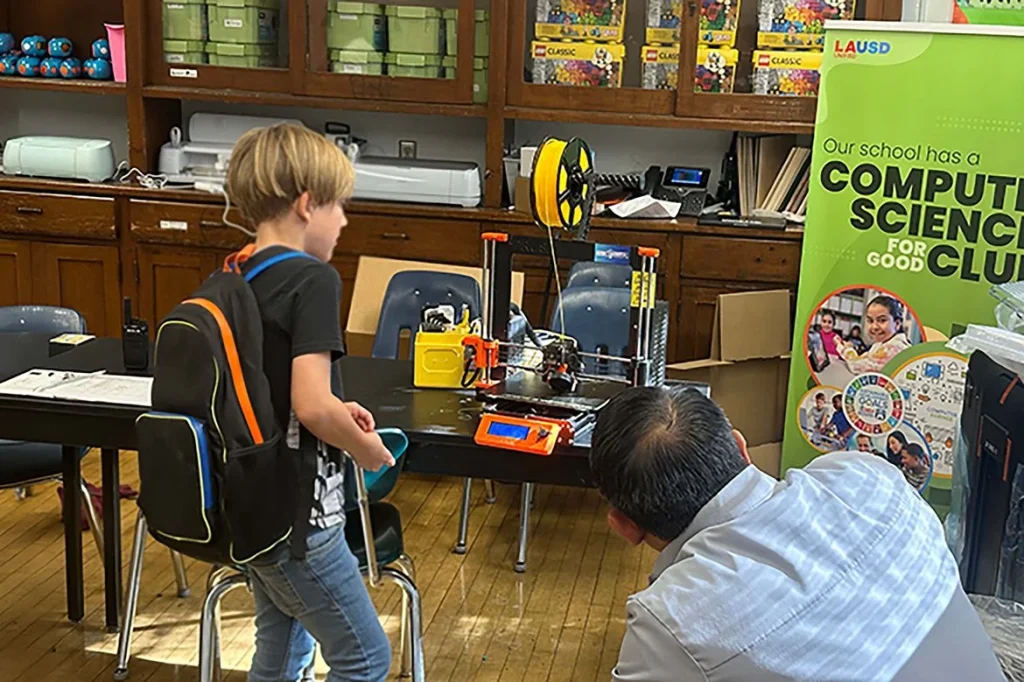
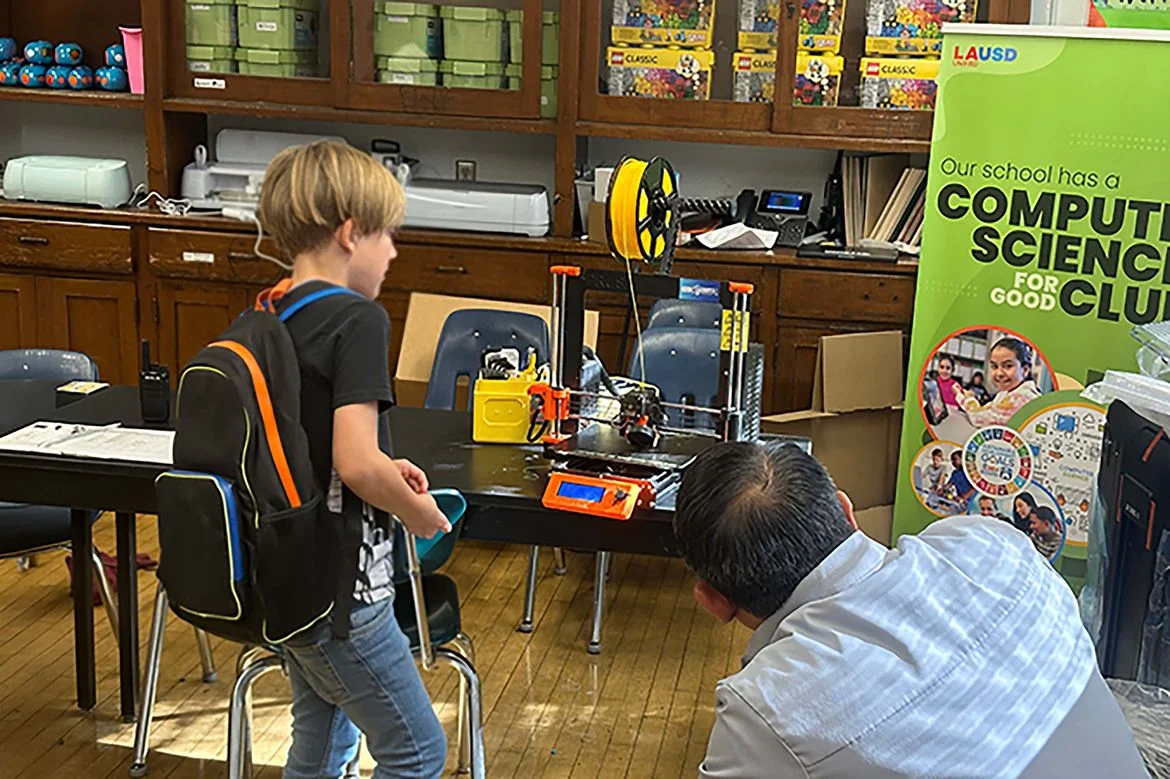
Working with the school’s Center for Excellence in Engineering and Diversity (CEED), the makerspace donated 10 printers during the 2026 winter quarter through CEED’s UCLA Math Engineering Science Achievement (MESA) pre-college program — one of California’s 19 MESA university centers designed to help students prepare for STEM degrees. The printers found new homes at Virgil Middle School; Birmingham, Inglewood United, Lawndale, San Fernando, Sylmar, University and Woodworth Monroe high schools; as well as the Los Angeles Center for Enriched Studies Magnet.
Targeting the Schools That Need It Most
The team was deliberate about where the printers went. The focus was on schools in Los Angeles, many within the Los Angeles Unified School District, with low graduation rates and limited external funding. Shah also prioritized schools that already had some infrastructure — a robotics club, an engineering magnet or a small makerspace — so a donated printer would land in capable hands.
“The students I’ve met have been some of the most passionate and engaged students,” Shah said. “I know that with the right resources and opportunities, they could go far.”
More Than Hardware: Workshops and Care Packages
In spring 2026, the effort expanded beyond printer donations. Makerspace students ran two-hour hands-on workshops at Virgil Middle School and Van Nuys Middle School STEAM Magnet, and delivered six more printers to additional schools across Los Angeles County. Each school also received a care package stocked with tools, filament, replacement parts and repair guides — the consumables and spares that quietly decide whether a school printer keeps running or ends up in a closet.
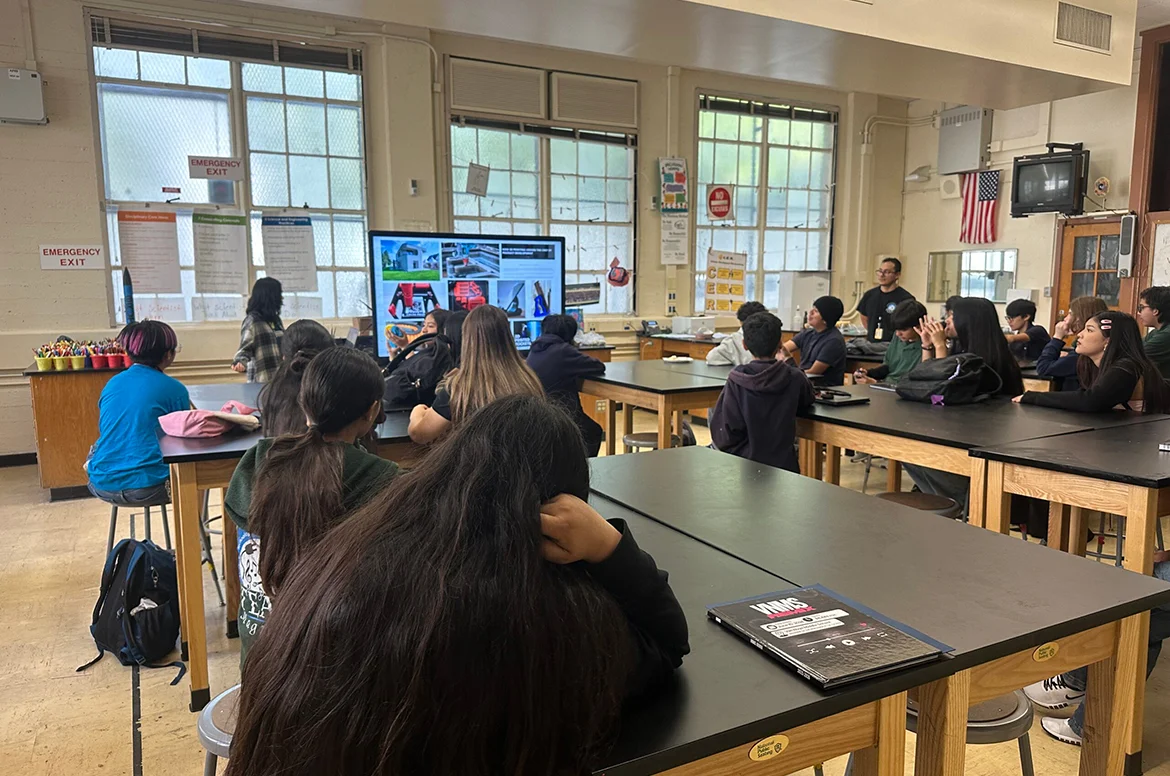
At Van Nuys Middle School, where a separate grant had already funded larger printers, students assembled 3D-printed potted-plant fidget toys with key switches inside — a project that combines design, electronics and the kind of satisfying tactile click that has driven the fidget toy boom. “It was amazing to see that some of the shy students were able to engage with their peers when it came time to collaborate,” said Jose Luis Sanchez, a seventh- and eighth-grade science teacher at the school.
Why 3D Printing Works in the Classroom
Jacob Schmidt, the makerspace’s faculty director and a bioengineering professor at UCLA, said the appeal of 3D printing for younger students goes beyond the technology itself. “It is a really powerful feeling to design something on a computer and be holding the same object in your hands a few hours later,” he said. The quick turnaround lets students iterate, fail and try again — the core of the engineering design process.
Schmidt also noted that UCLA’s role isn’t just to hand off equipment: “It also involves training students and teachers on how to use and repair the equipment so that they can in turn train others and start up a makerspace of their own.”
The timing is good. Market research firm IMARC Group estimates the global 3D printing in education market at roughly $438 million in 2026, on track to pass $1.3 billion by 2035 as schools adopt the technology for STEM curricula. Refurbished hardware, teacher training and hands-on workshops are exactly the ingredients driving that growth.
How TT3DPrint Can Help
Need Custom 3D Printing?
At TT3DPrint, we specialize in custom FDM 3D printing for figurines, prototypes, educational tools, and creative gifts. Whether you need a one-off prototype or a batch of custom products, we deliver worldwide.
Schools and programs that don’t have a makerspace of their own can still bring 3D-printed learning aids into the classroom. At TT3DPrint, we print custom educational models and teaching tools — from anatomy and geography models to classroom prototypes and custom fidget projects like the ones Van Nuys students built — using our large Bambu Lab printer fleet. Whether you need a one-off prototype or a batch of teaching aids for a whole department, we ship worldwide. Contact us for a quote.
Conclusion
A dozen refurbished printers, a few care packages and some weekend workshops may not sound like much — until a middle schooler holds a part they designed and starts imagining an engineering career. UCLA’s program shows that spreading 3D printing in education doesn’t always require new equipment; it requires upgrade cycles with a second life in mind, plus the training that keeps machines running. As more universities refresh their fleets and more schools build makerspaces, donations like this one could become a standard pathway for bringing additive manufacturing to the next generation.