eSUN PLA-HF: Breaking the 1000mm/s 3D Printing Speed Barrier

eSUN Unveils PLA-HF: A New Era for High-Speed 3D Printing
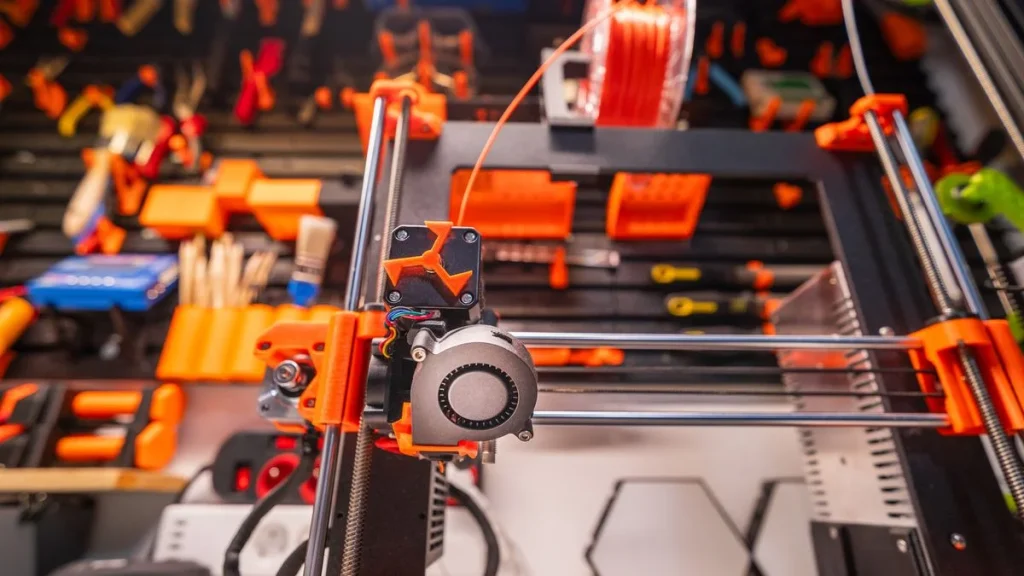
The 3D printing world just got a significant speed upgrade. eSUN, one of the world’s leading filament manufacturers, has officially announced PLA-HF — a new polylactic acid formulation engineered specifically for ultra-high-speed FDM printing. The headline number? A staggering 1000mm/s print speed, a figure that was considered science fiction just two years ago.
For context, standard PLA filament performs reliably at 40–80mm/s. Even the latest generation of high-speed printers from Bambu Lab, Creality, and Prusa typically push filament at 300–600mm/s before quality degrades. eSUN’s PLA-HF doesn’t just nudge the envelope — it shatters it.
This announcement, reported by multiple outlets including The Manila Times and Business Insider, signals a pivotal moment for the FDM 3D printing industry. But what exactly is PLA-HF, and why does it matter for businesses that rely on 3D printing at scale?
What Makes PLA-HF Different?
The “HF” in PLA-HF stands for High Flow, and that name reveals the core innovation. Traditional PLA, while excellent for general-purpose printing, was never designed for extreme volumetric flow rates. When you push standard PLA through a hotend at 500mm/s or faster, several problems emerge: inconsistent extrusion, poor layer adhesion, stringing, and surface quality that looks like it was printed during an earthquake.
eSUN’s engineering team tackled these limitations at the molecular level. PLA-HF features a modified polymer chain structure that reduces melt viscosity without sacrificing the material’s structural integrity. In practical terms, this means the filament flows more easily through the nozzle at high speeds while maintaining consistent extrusion width and strong interlayer bonding.
Key technical improvements in PLA-HF include:
- Optimized melt flow index (MFI): Significantly higher than standard PLA, enabling the filament to keep up with extreme print speeds without under-extrusion.
- Modified crystallization behavior: PLA-HF cools and solidifies faster than standard PLA, which is critical for maintaining dimensional accuracy when layers are deposited in milliseconds.
- Enhanced thermal stability: The formulation resists thermal degradation even at elevated nozzle temperatures required for high-flow printing.
- Improved layer adhesion: Despite faster cooling, PLA-HF maintains strong bonding between layers — a common weak point in speed-optimized filaments.
eSUN has also confirmed that PLA-HF is backward-compatible with existing high-speed printers. You don’t need a new machine to benefit from this filament, though the best results will come from printers with high-flow hotends and robust motion systems.
Speed vs. Quality: How eSUN Solved the Tradeoff
For years, the 3D printing community has operated under an implicit assumption: faster printing means worse quality. This tradeoff has been the single biggest bottleneck preventing FDM technology from competing with injection molding for production-scale manufacturing.
eSUN’s approach with PLA-HF challenges this assumption directly. By reformulating the material rather than simply cranking up printer speeds, they’ve decoupled velocity from quality degradation. Early reports suggest that PLA-HF can produce prints at 1000mm/s with surface quality comparable to standard PLA printed at 60mm/s.
The secret lies in volumetric flow matching. At extreme speeds, the limiting factor isn’t the printer’s motion system — it’s whether the hotend can melt filament fast enough to keep up. PLA-HF’s lower melting viscosity means the hotend doesn’t need to work as hard, reducing the temperature gradient between the heater block and the nozzle tip. This results in more consistent extrusion, fewer artifacts, and better overhang performance even at blistering speeds.
It’s worth noting that achieving 1000mm/s in real-world conditions will still depend on your hardware. Printers like the Bambu Lab X1C and P1S are optimized for high-speed printing and should see the most dramatic improvements. Older machines with standard hotends may not reach the full 1000mm/s but will still benefit from faster, cleaner printing at their maximum capable speeds.
What This Means for Print Farms and Production Workflows
The implications of PLA-HF extend far beyond hobbyist benchy speedruns. For businesses that operate print farms — companies running dozens or hundreds of printers simultaneously — speed translates directly to throughput, and throughput translates directly to revenue.
Consider a typical production scenario: a print that takes 4 hours at standard speeds might take just 90 minutes with PLA-HF at optimized settings. For a print farm running 100 machines, that’s the difference between producing 600 parts per day and over 1,600 parts per day. The math is compelling.
Beyond raw speed, PLA-HF offers several operational advantages for production environments:
- Reduced energy consumption per part: Faster prints mean less total electricity per unit produced.
- Lower labor costs: More parts per shift means fewer shifts needed to meet the same order volume.
- Faster iteration cycles: Prototypes and design revisions that previously took a full day can now be completed in a single morning.
- Competitive pricing: Higher throughput allows businesses to offer more competitive pricing while maintaining margins.
eSUN is currently running promotional pricing on PLA-HF with discounts of up to 25%, making this an ideal time for print farms to test the material and evaluate its impact on their workflows.
How TT3DPrint Can Help You Leverage High-Speed 3D Printing
At TT3DPrint, we operate one of the largest FDM print farms in the region with over 220 Bambu Lab printers running around the clock. We’re constantly evaluating new materials and techniques to deliver faster turnaround times and better quality for our customers.
Materials like eSUN’s PLA-HF represent exactly the kind of innovation we bring into our production pipeline. Whether you need custom figurines, functional prototypes, educational models, or branded promotional items, our team can help you take advantage of the latest high-speed printing technology — without the overhead of managing your own print farm.
Ready to see what high-speed 3D printing can do for your project? Get in touch with us for a free quote, and let’s bring your ideas to life — faster than ever.
Conclusion
eSUN’s PLA-HF filament represents a genuine breakthrough in FDM 3D printing materials. By engineering a polymer specifically designed for ultra-high-speed printing, they’ve addressed one of the industry’s longest-standing limitations. The 1000mm/s barrier has been broken, and the ripple effects will be felt across prototyping, production, and print farm operations worldwide.
As high-speed printers become the norm rather than the exception, materials like PLA-HF will be the differentiating factor between machines that merely go fast and machines that go fast well. For anyone serious about scaling their 3D printing operations, this is a material worth watching — and testing — immediately.