MIT’s InstructMesh Repairs AI-Generated 3D Models Before You Print
Introduction
Ask a generative AI system to design a mug for 3D printing and you will usually get a handsome cup that cannot hold your coffee. The models understand how an object should look, not how it has to work — so the wall is paper-thin, the handle is not attached, or the base is hollow in all the wrong places. A new tool from MIT CSAIL, developed together with Google and Northeastern University, targets exactly this gap between “looks great” and “actually prints”.
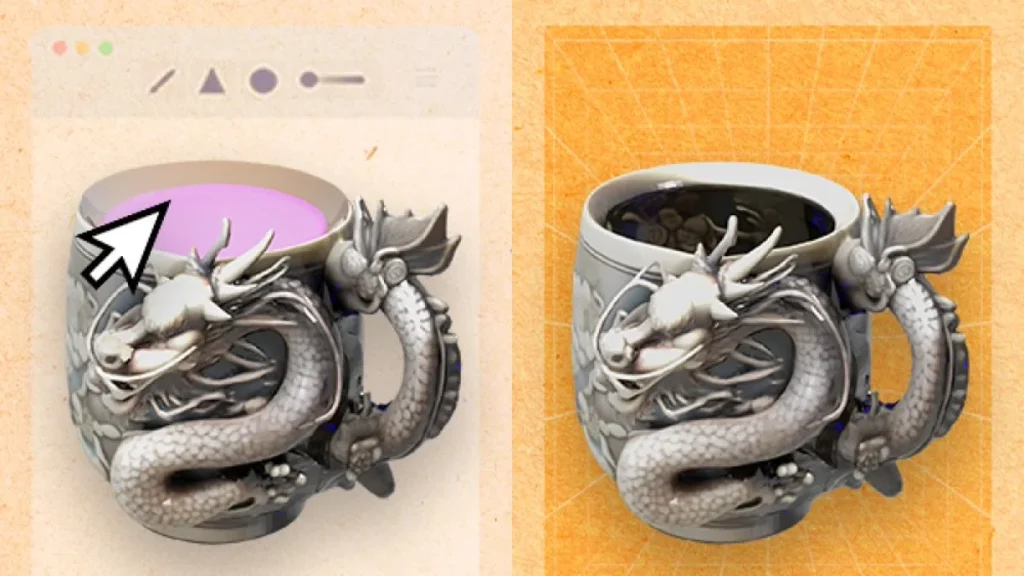
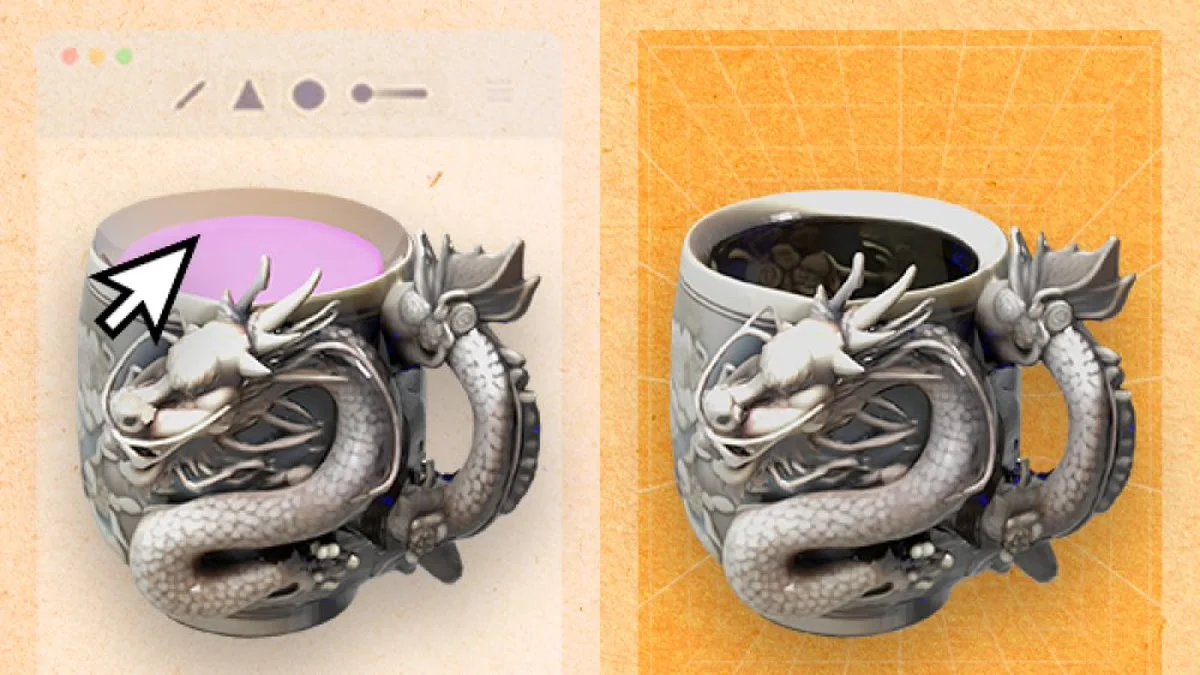
The system is called InstructMesh, and it lets anyone — including people with zero modeling experience — repair an AI-generated 3D model before sending it to the printer. Highlight the broken region, describe the fix in plain language (or move a slider), and approve the result.
Why Most AI-Generated 3D Models Fail in Print
Generative 3D tools optimize for visual plausibility, not geometric accuracy. In the study, the MIT team had Microsoft’s TRELLIS generator recreate popular models from Thingiverse, one of the largest libraries of 3D-printable designs. Nearly 80% of the generated models were structurally flawed in some way: open voids where the surface should be sealed, walls too thin to survive slicing, disconnected parts that fall off the build plate.
Those flaws are easy to miss on screen and expensive to discover mid-print — especially for makers who are still learning the craft. Repairing them traditionally means learning professional CAD or mesh-editing software, a barrier that keeps a lot of creative ideas stuck on the desktop.
How InstructMesh Fixes the Problem
InstructMesh combines two very different AI systems. Microsoft’s TRELLIS handles the 3D generation part — turning a text or image prompt into a model — while GPT-4 provides the reasoning layer that understands what the user wants changed.
The key trick is that edits happen in the latent space of the generative model rather than on individual mesh vertices. A user selects a region of the blueprint, then triggers targeted operations such as opening or sealing a void or adjusting local thickness. The change can be described conversationally (“make this wall thicker”, “remove this lid”) or dialed in with slider controls for finer precision. The result updates live, and the user decides whether to keep it.
In user studies, novices were able to both identify and repair fabrication problems in AI-generated models about 90% of the time, as reviewed by an expert. Participants built everyday objects such as phone stands and vases, and they consistently preferred the hybrid interface that mixes sliders with natural-language input.
From a Prompt to a Real, Working Object
The demo objects show what becomes possible when generation and repair work together: a mug wrapped by a dragon whose tail becomes the handle, a shell-shaped whistle that actually whistles, butterfly-wing glasses, and an octopus-like dispenser that pours into several cups at once. These are not renders for a portfolio — they are objects the team fabricated and used.
For custom printing services, this matters more than it might seem. Most customer ideas arrive as a rough sketch, a photo, or a paragraph of description, and translating them into a print-ready mesh is still the slowest, most expensive step of the process. Tools that close the “prompt to printable” gap directly shorten the path from a customer’s idea to a physical part.
What Comes Next
Lead author Faraz Faruqi, now at Google, has hinted at the next step: integrating InstructMesh into an augmented reality workflow where you describe what you need, the system designs it using the context around you, and the object is printed on the spot — a phone case that matches your wallet, for example. The paper, “InstructMesh: Selective Refinement of Generative 3D Models for Fabrication”, was presented by MIT CSAIL, Google, and Northeastern researchers.
Why It Matters for Custom and Educational Printing
For classrooms, makerspaces, and hobbyists, the appeal is that InstructMesh removes the modeling bottleneck rather than the creativity. A student who can describe the fix they want can also get a printable result, without first mastering software that usually takes weeks to feel comfortable with. The team’s own examples — a phone stand, a vase, a working whistle — are exactly the kind of small, personal objects that drive most beginner 3D printing projects.
It is also a preview of how professional workflows are moving. Instead of hand-editing meshes after generation, designers increasingly review and correct AI output the way they would review a junior colleague’s draft: point at the problem, say what should change, approve the revision. The same pattern is starting to appear in slicers and modeling suites, and it lowers the skill floor for everyone who wants a physical object rather than a render.
Conclusion
AI will not stop producing pretty-but-unprintable models any time soon. What InstructMesh shows is that the fix does not have to be manual CAD work: with region selection, natural language, and a few sliders, first-time makers can correct the flaws that would have ruined a print. The distance between “I have an idea” and “I have the part” keeps getting shorter.
Need Custom 3D Printing?
At TT3DPrint, we specialize in custom FDM 3D printing for figurines, prototypes, educational tools, and creative gifts. Send us your model — or just your idea — and we will help turn it into a print-ready part. We deliver worldwide.